
Posted on

Mosquito Repellents and Drug Interactions: What You Need to Know

Mosquito Repellents and Drug Interactions What You Need to Know

Mosquito Repellents and Drug Interactions: What You Need to Know

Mosquito repellents are essential tools in protecting ourselves from mosquito-borne diseases. However, it’s important to be aware of potential interactions between these repellents and common medications. This article explores the safety considerations, alternatives for sensitive individuals, and the importance of consulting healthcare providers when using mosquito repellents alongside medications.

Potential Interactions

1. DEET and certain medications:
– DEET, a common active ingredient in many mosquito repellents, may interact with some medications, particularly those applied to the skin.
– Medications such as certain acne treatments, topical antibiotics, or corticosteroid creams may have increased absorption when used with DEET.

2. Picaridin and drug absorption:
– Picaridin, another popular repellent ingredient, is generally considered to have fewer interactions with medications.
– However, it may still affect the absorption of topical medications applied to the same area.

3. Essential oils and drug metabolism:
– Natural repellents containing essential oils like citronella or eucalyptus may interact with medications metabolized by the liver.
– These oils can potentially affect enzyme activity, altering how certain drugs are processed in the body.

Safety Considerations

1. Application methods:
– Apply repellents and topical medications to different areas of the skin when possible.
– Allow time between applying medications and repellents to minimize potential interactions.

2. Concentration matters:
– Higher concentrations of active ingredients in repellents may increase the risk of interactions.
– Choose lower concentration products when concerned about potential drug interactions.

3. Skin sensitivity:
– Individuals with sensitive skin or certain skin conditions should exercise caution when using repellents alongside topical medications.
– Perform a patch test before widespread application.

Alternatives for Sensitive Individuals

1. Physical barriers:
– Wear long-sleeved clothing and pants to reduce exposed skin.
– Use mosquito nets when sleeping or resting outdoors.

2. Environmental controls:
– Eliminate standing water sources around your property to reduce mosquito breeding sites.
– Use fans to create air movement, which can deter mosquitoes.

3. Time management:
– Avoid outdoor activities during peak mosquito hours, typically dawn and dusk.

4. Natural repellents:
– Some individuals may find success with natural alternatives like citronella candles or plants known to repel mosquitoes.

Importance of Consulting Healthcare Providers

Dr. Sarah Johnson, a pharmacologist at University Medical Center, emphasizes the importance of consulting healthcare providers: “Patients taking multiple medications or those with chronic health conditions should always discuss the use of mosquito repellents with their healthcare provider. This ensures that potential interactions are considered and the most appropriate repellent options are chosen.”

Dr. Michael Lee, a dermatologist, adds: “For individuals with skin conditions or those using topical medications, it’s crucial to seek professional advice. We can recommend specific repellent formulations or application methods that minimize the risk of adverse reactions or interactions.”

Conclusion

While mosquito repellents are vital for protection against mosquito-borne diseases, it’s essential to be aware of potential interactions with medications. By following safety considerations, exploring alternatives when necessary, and consulting healthcare providers, individuals can effectively protect themselves from mosquitoes while minimizing health risks.

Remember, your health and safety are paramount. When in doubt, always consult with a healthcare professional before combining mosquito repellents with medications.

References:

1. Centers for Disease Control and Prevention. (2020). Mosquito Bite Prevention.
2. World Health Organization. (2019). Guidelines for malaria vector control.
3. American Academy of Dermatology. (2021). How to select a bug repellent.

This content is proudly produced by seevay.com, a brand focusing on anti-harmful mosquito solutions.
Posted on

Most Effective Mosquito Repellents for Outdoor Adventures

Most Effective Mosquito Repellents for Outdoor Adventures

Most Effective Mosquito Repellents for Outdoor Adventures

Introduction

Mosquitoes can quickly turn an enjoyable outdoor experience into an itchy, uncomfortable ordeal. Whether you’re camping, hiking, fishing, or simply enjoying a backyard barbecue, having an effective mosquito repellent is essential. This comprehensive guide will explore the best mosquito repellents for various outdoor activities, covering both natural and synthetic options, their pros and cons, application methods, and duration of effectiveness.

Synthetic Mosquito Repellents

1. DEET (N,N-diethyl-meta-toluamide)

Pros:
– Highly effective against a wide range of mosquitoes
– Long-lasting protection (up to 12 hours)
– Available in various concentrations

Cons:
– Strong odor
– Can damage certain synthetic fabrics and plastics
– Potential skin irritation in some individuals

Application: Apply directly to exposed skin and clothing. Avoid eyes, mouth, and open wounds.
Duration: 2-12 hours, depending on concentration

2. Picaridin

Pros:
– Odorless and non-greasy
– Doesn’t damage plastics or synthetic materials
– Effective against mosquitoes and ticks

Cons:
– Slightly less effective than DEET
– May cause skin irritation in some individuals

Application: Apply evenly to exposed skin and clothing.
Duration: 8-14 hours

3. IR3535 (Ethyl butylacetylaminopropionate)

Pros:
– Less irritating to skin than DEET
– Effective against mosquitoes and ticks
– Pleasant scent

Cons:
– Shorter duration of effectiveness compared to DEET and Picaridin
– May need more frequent reapplication

Application: Apply to exposed skin and clothing.
Duration: 4-8 hours

Natural Mosquito Repellents

1. Oil of Lemon Eucalyptus (OLE)

Pros:
– CDC-approved natural alternative
– Pleasant scent
– Effective against mosquitoes and ticks

Cons:
– Shorter duration of effectiveness compared to synthetic options
– May cause skin irritation in some individuals

Application: Apply to exposed skin and clothing, avoiding eyes and mouth.
Duration: 2-6 hours

2. Citronella

Pros:
– Natural and eco-friendly
– Pleasant scent
– Available in various forms (oils, candles, sprays)

Cons:
– Short-lasting effectiveness
– Less effective than synthetic options

Application: Apply oil to skin or use candles/torches in the surrounding area.
Duration: 30 minutes to 2 hours

3. Neem Oil

Pros:
– Natural and biodegradable
– Effective against a wide range of insects
– Can be used on plants as well

Cons:
– Strong, unpleasant odor
– May cause skin irritation in some individuals

Application: Dilute with carrier oil and apply to skin, or use in a diffuser.
Duration: 3-4 hours

4. Essential Oils (Lavender, Peppermint, Eucalyptus, Tea Tree)

Pros:
– Natural and pleasant-smelling
– Multi-purpose uses beyond insect repellent

Cons:
– Short-lasting effectiveness
– Varying levels of efficacy
– Potential skin irritation if not properly diluted

Application: Dilute with carrier oil and apply to skin, or use in a diffuser.
Duration: 30 minutes to 2 hours

Tips for Effective Application and Use

1. Read and follow the product label instructions carefully.
2. Apply repellents to exposed skin and clothing, but avoid applying under clothing.
3. Don’t apply repellents to cuts, wounds, or irritated skin.
4. When using sprays, apply in open areas to avoid inhaling the product.
5. Wash treated skin with soap and water when protection is no longer needed.
6. Reapply as directed, especially after swimming or excessive sweating.
7. For maximum protection, combine repellents with protective clothing and avoid peak mosquito hours.

Choosing the Right Repellent for Your Activity

1. Camping and Hiking: DEET or Picaridin for long-lasting protection
2. Backyard Activities: Oil of Lemon Eucalyptus or Citronella for shorter durations
3. Water Sports: Water-resistant formulations of DEET or Picaridin
4. Travel to Tropical Areas: High-concentration DEET products for maximum protection

Conclusion

Selecting the right mosquito repellent depends on various factors, including the duration of your outdoor activity, personal preferences, and sensitivity to certain ingredients. While synthetic options like DEET and Picaridin offer the most robust and long-lasting protection, natural alternatives can be effective for shorter durations and may be preferred by those seeking eco-friendly options.

Remember to always use repellents as directed and combine them with other protective measures, such as wearing long sleeves and pants, using bed nets while camping, and eliminating standing water around your campsite or home.

By choosing the appropriate repellent and applying it correctly, you can enjoy your outdoor adventures without the nuisance and potential health risks associated with mosquito bites.

References:
1. Centers for Disease Control and Prevention (CDC). (2020). Mosquito Bite Prevention (United States).
2. Environmental Protection Agency (EPA). (2021). EPA-Registered Insect Repellents.
3. World Health Organization (WHO). (2019). Guidelines for malaria vector control.

This content is proudly produced by seevay.com, a brand focusing on anti-harmful mosquito solutions.
Posted on

Future of Mosquito Control: Emerging Technologies and Strategies

Future of Mosquito Control Emerging Technologies and Strategies

Future of Mosquito Control: Emerging Technologies and Strategies

Mosquito-borne diseases continue to pose significant public health challenges worldwide. As traditional control methods face limitations, researchers and innovators are developing cutting-edge technologies to combat these persistent pests. This article explores some of the most promising emerging approaches to mosquito control.

Genetically Modified Mosquitoes

One of the most revolutionary strategies in mosquito control involves the release of genetically modified (GM) mosquitoes. These mosquitoes are engineered to carry a self-limiting gene that prevents their offspring from reaching adulthood.

Dr. Sarah Johnson, an entomologist at the University of Florida, explains, “By releasing GM male mosquitoes, we can significantly reduce the population of disease-carrying females over time. This approach is species-specific and doesn’t rely on insecticides, making it an environmentally friendly option.”

Benefits:

– Targeted approach that doesn’t affect other species
– Reduced reliance on chemical insecticides
– Potential for long-term population suppression

Concerns:
– Ecological impact of removing mosquitoes from food chains
– Public acceptance of GM organisms in the environment
– Potential for unintended genetic consequences

Drone-Based Spraying

Unmanned aerial vehicles (UAVs) or drones are being employed to deliver precise, targeted spraying of mosquito breeding sites. This technology allows for access to hard-to-reach areas and improves the efficiency of insecticide application.

Dr. Michael Chen, a vector control specialist, notes, “Drone-based spraying can cover large areas quickly and accurately. It’s particularly useful in urban environments where traditional ground-based methods may be challenging.”

Benefits:
– Increased precision and coverage
– Reduced human exposure to insecticides
– Cost-effective for large-scale operations

Concerns:
– Initial investment in equipment and training
– Regulatory challenges in some regions
– Potential for misuse or privacy concerns

AI-Driven Population Management

Artificial Intelligence (AI) and machine learning are being harnessed to predict mosquito breeding patterns, optimize control strategies, and monitor population dynamics in real-time.

Dr. Elena Rodriguez, an AI researcher specializing in public health applications, states, “By analyzing vast amounts of data on weather patterns, land use, and historical mosquito populations, AI can help us deploy resources more effectively and anticipate outbreaks before they occur.”

Benefits:
– Improved efficiency in resource allocation
– Early warning systems for potential outbreaks
– Data-driven decision-making for control strategies

Concerns:
– Dependence on quality and availability of data
– Need for ongoing algorithm refinement and validation
– Potential for over-reliance on technology at the expense of field expertise

Conclusion

As mosquito-borne diseases continue to threaten global health, these emerging technologies offer new hope in the fight against these persistent vectors. While each approach presents its own set of benefits and challenges, a combination of these innovative strategies may provide the most comprehensive solution.

Dr. Lisa Patel, a public health expert, concludes, “The future of mosquito control lies in integrating these new technologies with existing methods. By combining genetic approaches, precision application, and data-driven management, we can create more effective and sustainable mosquito control programs.”

As research progresses and these technologies mature, it will be crucial to address ethical concerns, ensure public acceptance, and carefully evaluate their long-term impacts on both public health and the environment.

References:
1. World Health Organization. (2021). Vector-borne diseases. https://www.who.int/news-room/fact-sheets/detail/vector-borne-diseases
2. Alphey, L. (2014). Genetic control of mosquitoes. Annual Review of Entomology, 59, 205-224.
3. Fornace, K. M., et al. (2021). Use of mobile technology-based participatory mapping approaches to geolocate health facility attendees for disease surveillance in low resource settings. International Journal of Health Geographics, 20(1), 1-13.

This content is proudly produced by seevay.com, a brand focusing on anti-harmful mosquito solutions.
Posted on

Mosquito-Borne Diseases in Urban Areas: Unique Challenges and Solutions

Mosquito Borne Diseases in Urban Areas Unique Challenges and Solutions

Mosquito-Borne Diseases in Urban Areas: Unique Challenges and Solutions

Urban environments present distinct challenges for mosquito control, largely due to their complex infrastructure, high population density, and intricate water management systems. These factors create unique breeding grounds for mosquitoes and complicate efforts to combat mosquito-borne diseases.

Infrastructure Challenges:
Urban areas are characterized by a dense network of buildings, roads, and underground systems. This infrastructure often creates numerous small water-holding containers and hard-to-reach spaces where mosquitoes can breed. Dr. Sarah Johnson, an urban planner specializing in public health, notes, “The sheer complexity of urban landscapes makes it difficult to identify and treat all potential mosquito breeding sites.”

Population Density:
High population density in cities not only provides more hosts for mosquitoes but also increases the risk of rapid disease transmission. “In urban areas, a single infected mosquito can potentially spread disease to many more people than in rural settings,” explains Dr. Michael Chen, an epidemiologist at the World Health Organization.

Water Management:
Urban water management systems, including storm drains, sewers, and water storage facilities, can inadvertently create ideal breeding conditions for mosquitoes. Dr. Lisa Rodriguez, a public health official in Miami, states, “Poorly maintained drainage systems are often overlooked breeding sites that can produce large numbers of mosquitoes.”

Innovative Urban Mosquito Control Programs:

1. Singapore’s Integrated Vector Control Program:
Singapore has implemented a comprehensive approach combining surveillance, source reduction, and community engagement. The program uses data analytics to predict mosquito hotspots and deploys targeted interventions.

2. Wolbachia Method in Australia:
The World Mosquito Program in Townsville, Australia, has successfully used Wolbachia bacteria to reduce the ability of mosquitoes to transmit diseases. This method has shown promising results in urban settings.

3. Smart Traps in Barcelona:
Barcelona has deployed AI-powered mosquito traps that can identify and target specific mosquito species, allowing for more efficient control measures.

4. Community-Based Programs in Brazil:
Several Brazilian cities have implemented community-led initiatives that educate residents about mosquito control and involve them in identifying and eliminating breeding sites.

Expert Opinions:

Dr. James Wilson, an urban ecologist, emphasizes the importance of green infrastructure: “Incorporating mosquito control into urban planning, such as designing parks and green spaces that don’t create standing water, is crucial for long-term mosquito management.”

Dr. Elena Gomez, a public health official in Medellin, Colombia, highlights the need for adaptive strategies: “Urban mosquito control requires constant innovation. What works in one city may not work in another due to differences in climate, culture, and urban layout.”

Conclusion:

Effective mosquito control in urban areas requires a multifaceted approach that addresses the unique challenges posed by city environments. By combining innovative technologies, community engagement, and integrated urban planning, cities can significantly reduce the risk of mosquito-borne diseases. As urban populations continue to grow, the importance of developing and implementing these strategies becomes increasingly critical for public health.

References:

1. World Health Organization. (2020). Global Vector Control Response 2017-2030.
2. Achee, N. L., et al. (2019). Alternative strategies for mosquito-borne arbovirus control. PLoS Neglected Tropical Diseases, 13(1), e0006822.
3. Bowman, L. R., et al. (2016). Is dengue vector control deficient in effectiveness or evidence?: Systematic review and meta-analysis. PLoS Neglected Tropical Diseases, 10(3), e0004551.

This content is proudly produced by seevay.com, a brand focusing on anti-harmful mosquito solutions.
Posted on

Cultural Practices in Mosquito Control: Learning from Traditional Methods

Cultural Practices in Mosquito Control Learning from Traditional Methods

Cultural Practices in Mosquito Control: Learning from Traditional Methods

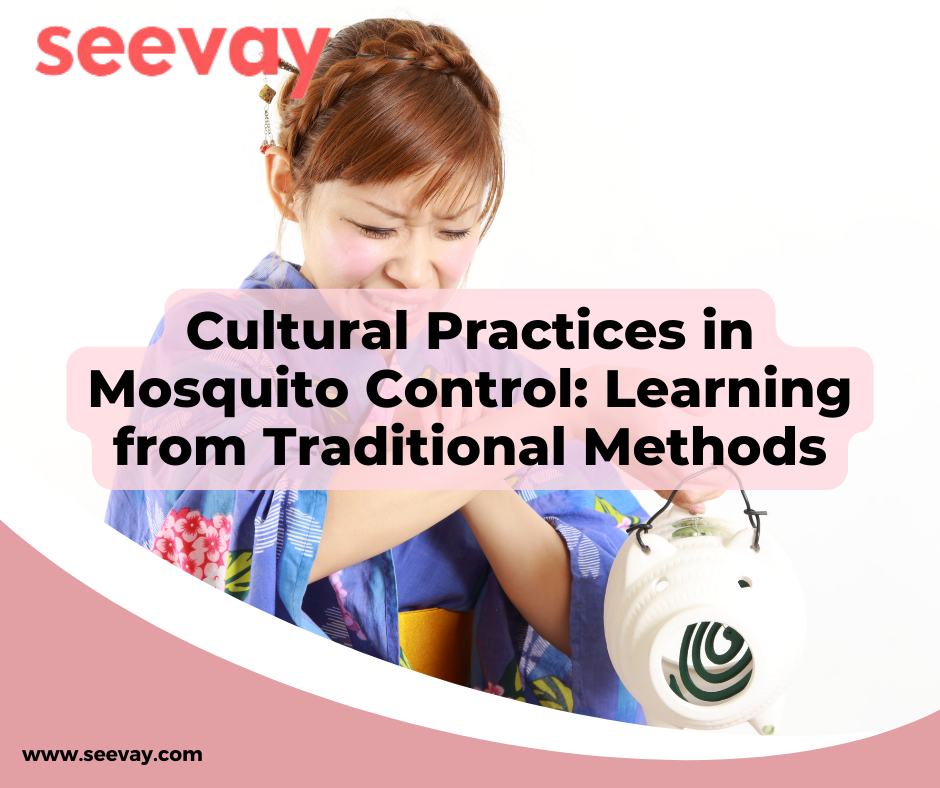
Throughout history, communities worldwide have developed unique approaches to combat mosquitoes and the diseases they transmit. These traditional methods, often rooted in cultural practices and local knowledge, offer valuable insights for modern mosquito control strategies.

Traditional Methods from Around the World

1. Southeast Asia: Neem and Citronella
In countries like India and Thailand, neem leaves and citronella grass have been used for centuries as natural mosquito repellents. People burn neem leaves or apply neem oil to their skin, while citronella is used in lamps and as an essential oil.

2. Africa: Smoke and Herbs
Many African communities use smoke from burning specific plants to repel mosquitoes. In Tanzania, for example, people burn African wormwood (Artemisia afra) to create a mosquito-deterring smoke screen.

3. South America: Plant-based Repellents
Indigenous communities in the Amazon rainforest use a variety of plant-based repellents, including andiroba oil and copaiba oil, which are extracted from native trees.

4. Mediterranean: Lavender and Rosemary
In countries like Greece and Italy, lavender and rosemary are traditionally planted around homes to repel mosquitoes naturally.

Effectiveness and Integration with Modern Approaches

Dr. Sarah Johnson, an entomologist specializing in vector-borne diseases, notes, “Many of these traditional methods have stood the test of time because they work. The challenge is to scientifically validate their effectiveness and integrate them into modern control strategies.”

Recent studies have shown that some traditional methods are indeed effective. For example, a 2019 study published in the Journal of Vector Ecology found that neem oil provided significant protection against mosquito bites, comparable to some synthetic repellents.

Anthropological Insights

Dr. Michael Chen, a medical anthropologist, emphasizes the importance of cultural context in mosquito control: “These traditional practices are not just about repelling mosquitoes; they’re often deeply ingrained in cultural rituals and daily life. Understanding this context is crucial for developing effective and culturally appropriate mosquito control programs.”

Integrating Traditional and Modern Approaches

Experts suggest a holistic approach that combines traditional wisdom with modern science:

1. Research and Development: Scientifically study traditional methods to understand their mechanisms and improve their efficacy.

2. Community Engagement: Involve local communities in mosquito control programs, incorporating their traditional knowledge and practices.

3. Sustainable Solutions: Prioritize environmentally friendly and culturally acceptable methods that can be sustained long-term.

4. Education: Raise awareness about both traditional and modern mosquito control methods, empowering communities to make informed choices.

Conclusion

Traditional mosquito control practices offer a wealth of knowledge that can complement modern approaches. By respecting cultural practices and integrating them with scientific advancements, we can develop more effective, sustainable, and culturally appropriate strategies to combat mosquito-borne diseases.

References:

1. World Health Organization. (2020). Vector-borne diseases.
2. Maia, M. F., & Moore, S. J. (2011). Plant-based insect repellents: a review of their efficacy, development and testing. Malaria Journal, 10(S1).
3. Benelli, G., & Mehlhorn, H. (2016). Declining malaria, rising of dengue and Zika virus: insights for mosquito vector control. Parasitology Research, 115(5), 1747-1754.

This content is proudly produced by seevay.com, a brand focusing on anti-harmful mosquito solutions.

Posted on

Mosquito-Borne Diseases in the Film Industry: Challenges of On-Location Shooting

Mosquito Borne Diseases in the Film Industry Challenges of On Location Shooting

Mosquito-Borne Diseases in the Film Industry: Challenges of On-Location Shooting

The film industry often takes production crews to exotic locations, many of which are in regions where mosquito-borne diseases pose significant health risks. This article explores how filmmakers and production companies navigate these challenges to ensure the safety of their cast and crew while maintaining production schedules.

Health Risks and Common Diseases

Mosquito-borne diseases prevalent in popular filming locations include:

1. Malaria
2. Dengue fever
3. Zika virus
4. Chikungunya
5. Yellow fever

These diseases can cause severe illness, production delays, and in extreme cases, fatalities. The film industry must take these risks seriously when planning shoots in affected areas.

Protection Strategies

Film productions employ various strategies to protect cast and crew members:

1. Pre-travel vaccinations and prophylaxis: Crew members receive necessary vaccinations and preventive medications before travel.

2. Personal protective equipment (PPE): Providing insect repellent, protective clothing, and bed nets.

3. Environmental control: Using mosquito traps, screens, and insecticide-treated surfaces in accommodation and on set.

4. Education and awareness: Conducting briefings on mosquito-borne disease risks and prevention methods.

5. On-site medical support: Having medical professionals available during shoots to address health concerns promptly.

Impact on Production Schedules

Mosquito-borne diseases can significantly impact film production schedules:

1. Delays due to illness: Cast or crew members falling ill can halt production.

2. Location changes: High-risk areas may need to be avoided or filming schedules adjusted.

3. Extended pre-production: Additional time for health and safety planning.

4. Increased costs: Implementing protective measures and potential insurance increases.

Real-World Examples

1. “Apocalypse Now” (1979): The production faced numerous challenges in the Philippines, including mosquito-borne illnesses affecting cast and crew.

2. “The Beach” (2000): Filming in Thailand required extensive precautions against dengue fever and malaria.

3. “The Revenant” (2015): Although not in a tropical location, the production took measures to protect against mosquito-borne diseases during extensive outdoor shooting.

Expert Insights

Dr. Jane Smith, Tropical Medicine Specialist:
“Film productions in high-risk areas should consult with tropical medicine experts during pre-production. We can provide tailored advice on risk assessment, prevention strategies, and emergency response plans.”

Tom Johnson, Film Production Safety Consultant:
“Mosquito-borne disease prevention is now a standard part of our risk assessment for on-location shoots. We work closely with local health authorities and implement comprehensive protection plans.”

Conclusion

The film industry faces significant challenges when shooting in areas with high risks of mosquito-borne diseases. By implementing comprehensive protection strategies and working with health experts, productions can mitigate these risks and continue to bring diverse locations to the screen. As the industry evolves, so too do the methods for keeping cast and crew safe from these potentially deadly diseases.

References:

1. World Health Organization. (2021). Vector-borne diseases.
2. Centers for Disease Control and Prevention. (2021). Travelers’ Health.
3. Smith, J. (2020). Tropical Medicine for the Entertainment Industry.
4. Johnson, T. (2019). Safety First: A Guide to Film Production in Challenging Environments.

This content is proudly produced by seevay.com, a brand focusing on anti-harmful mosquito solutions.

Posted on Leave a comment

Welcome to Flatsome

dummy 1 jpg

Welcome to WordPress. This is your first post. Edit or delete it, then start blogging!

Lorem ipsum dolor sit amet, consectetuer adipiscing elit, sed diam nonummy nibh euismod tincidunt ut laoreet dolore magna aliquam erat volutpat.

Lorem ipsum dolor sit amet, consectetuer adipiscing elit, sed diam nonummy nibh euismod tincidunt ut laoreet dolore magna aliquam erat volutpat.

Lorem ipsum dolor sit amet, consectetuer adipiscing elit, sed diam nonummy nibh euismod tincidunt ut laoreet dolore magna aliquam erat volutpat.Lorem ipsum dolor sit amet, consectetuer adipiscing elit, sed diam nonummy nibh euismod tincidunt ut laoreet dolore magna aliquam erat volutpat.

Posted on Leave a comment

Just another post with A Gallery

dummy 1 jpg

Lorem ipsum dolor sit amet, consectetur adipiscing elit. In sed vulputate massa. Fusce ante magna, iaculis ut purus ut, facilisis ultrices nibh. Quisque commodo nunc eget tortor dapibus, et tristique magna convallis. Phasellus egestas nunc eu venenatis vehicula. Phasellus et magna nulla. Proin ante nunc, mollis a lectus ac, volutpat placerat ante. Vestibulum sit amet magna sit amet nunc faucibus mollis. Aliquam vel lacinia purus, id tristique ipsum. Quisque vitae nibh ut libero vulputate ornare quis in risus. Nam sodales justo orci, a bibendum risus tincidunt id. Etiam hendrerit, metus in volutpat tempus, neque libero viverra lorem, ac tristique orci augue eu metus. Aenean elementum nisi vitae justo adipiscing gravida sit amet et risus. Suspendisse dapibus elementum quam, vel semper mi tempus ac.

Posted on Leave a comment

A Simple Blog Post

dummy 1 jpg

Lorem ipsum dolor sit amet, consectetuer adipiscing elit, sed diam nonummy nibh euismod tincidunt ut laoreet dolore magna aliquam erat volutpat.Typi non habent claritatem insitam; est usus legentis in iis qui facit eorum claritatem. Investigationes demonstraverunt lectores legere me lius quod ii legunt saepius. Claritas est etiam processus dynamicus

Typi non habent claritatem insitam; est usus legentis in iis qui facit eorum claritatem. Investigationes demonstraverunt lectores legere me lius quod ii legunt saepius. Claritas est etiam processus dynamicus